
Think not to confuse me with poems or love beginning
Without a sign or sound...
~Mary Oliver, "Being Country Bred"
A Google search for “poetry prompts” directs us to 33 million links, just over the broader “writing prompts” which yields 29 million. And Amazon offers 951 hits for book-length collections of poetry prompts; 6,000 for writing prompts in general. In short, there is a whole industry based on the assumption that we must have someone’s hand clasped over our writing hand to guide it, much like that hand guided us while we learned the now-disappearing art of cursive writing.
Without a sign or sound...
~Mary Oliver, "Being Country Bred"
A Google search for “poetry prompts” directs us to 33 million links, just over the broader “writing prompts” which yields 29 million. And Amazon offers 951 hits for book-length collections of poetry prompts; 6,000 for writing prompts in general. In short, there is a whole industry based on the assumption that we must have someone’s hand clasped over our writing hand to guide it, much like that hand guided us while we learned the now-disappearing art of cursive writing.
Sappho, William Blake, Charles Dickens, Anthony Trollope,
Emily Dickinson, and Virginia Woolf did not need to look outside of themselves
for someone to offer them prompts for writing. Nor did Rilke, Shakespeare, or
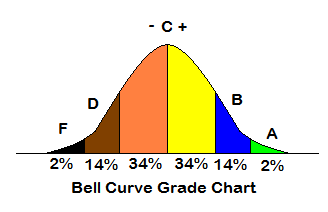
Ice-T. Prompts are the invention of teachers who need to control variables so
as to be able to grade students comparatively on the bell curve.
Write a fourteen-line poem about your mother in the form
of a weather report set
on a winter’s day. For inspiration, listen to a weather report on television or through YouTube. Include the color red and
the following words: “major, rabbit, kill, apple."
With a threat of grade hovering over them, students will dutifully mark out fourteen lines, watch reports, and tick off the color red and the required words as they contrive them into place. Or students will balk. I’m with the students who balk. As student Germain Palacios said of writing prompts, “that regimental approach to writing often stifled my true voice and creativity.”
Yes. I know the allure of prompts. I have written
hundreds of poems in response to them—doing so saw me through recovery from
bunion surgery, it secured a place for me in community publications, I saw my
name in the lights of anthologies and literary journals, I kept a promise to someone
who invited me to submit. Like
the smartphone, social networks, YouTube, and Netflix, prompts relieved me of
the responsibility for focusing myself—prompts did that hard work for me. And I met all the requirements, no matter how intricate or distancing.
Prompts
are as addicting as substances: numbing the discomforts of feeling and growth;
tempting us with immediate gratification; fostering people-pleasing; making
others responsible for us; distracting us from our higher, intuitive and
risk-taking selves; eventually making our creative lives unmanageable without them.
But
the poems I have written to external promptings have never been my best poems. Without knowing the genesis of all the individual
poems, my friend Carole and I, when reading through each other’s poetry manuscripts,
consistently choose for deletion the prompt poems. Something doesn’t ring “authentic.”
In
his collection of essays Poetry and
Ambition, Donald Hall calls the poems marching off the assembly lines of
academia “MacPoems.” Generated in, from,
and for the academic classroom and Poe Biz—publication, teaching positions,
reading circuit—these poems are externally prompted for external approval and
acceptance. They are, too often, more
about politics than poetry.
My
students—hard-wired to write in response to prompts, to teacher-please, to
supply their grade-junking needs—ask for me to tell them “what I want.” Always apprehensive about making them my
clones, of doing for them what they must do for themselves, I listened,
instead, to what they said about themselves.
I got into the habit of noticing for them all the possible directions
their own poetry might take: “That’s a
poem idea,” “Write about that.” I became
an idea mill, for the sake of being an idea mill. I became an idea mill for my
own work—displacing the more important authentic need to listen to myself, express,
explore, follow-through. I saw “prompts”
in everything. It silenced me.
Pornography
is isolating/wresting one aspect of someone or something to use for our momentary
pleasure. Writing to a prompt, I wrest
my writing capacity from all other aspects of myself—my angst, questioning,
fecund chaos, wonder, patience, possibility—to have the momentary pleasure of
saying “I wrote a poem,” or, worse, “my poem will be published.”
As opposed to
inspiration—“in,” as from within; “spira,” as from one’s own breath, own internal
promptings—external prompts invite us to exploit ourselves—as in ‘attempt to capture,’ ‘military expedition,’
‘overworking,’ ‘using’—in the service of amassing, hoarding, piling up more
poems or grades. Relying on outer
prompts instead of inner promptings are living a reactive as opposed to
proactive life, of buying gifts by bridal registry instead of loving attention,
shopping for the sake of shopping, writing to say I’m writing, Astro Turf
instead of leaves of grass, shadow instead of substance.
