Showing posts with label teaching of writing. Show all posts

Wednesday, February 7, 2018

Prompts, Proctors, Pornography

Image result for dark fantasy writing prompts

                   Think not to confuse me with poems or love beginning
                               Without a sign or sound...

                                            ~Mary Oliver, "Being Country Bred"

             A Google search for “poetry prompts” directs us to 33 million links, just over the broader “writing prompts” which yields 29 million. And Amazon offers 951 hits for book-length collections of poetry prompts; 6,000 for writing prompts in general.  In short, there is a whole industry based on the assumption that we must have someone’s hand clasped over our writing hand to guide it, much like that hand guided us while we learned the now-disappearing art of cursive writing. 

            Sappho, William Blake, Charles Dickens, Anthony Trollope, Emily Dickinson, and Virginia Woolf did not need to look outside of themselves for someone to offer them prompts for writing. Nor did Rilke, Shakespeare, or Ice-T. Prompts are the invention of teachers who need to control variables so as to be able to grade students comparatively on the bell curve.  
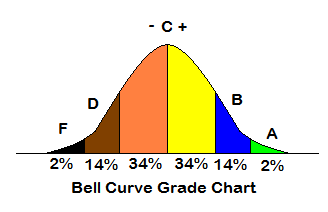
Image result for bell curve grade
            A grade book and quarterly report card cannot wait for the messy process of inspiration and students straying into topics that are not easily accessible.  A lesson plan must be clear, consecutive, easily assessable if the teacher is to be rehired for tenure. And must be completed so that the students can turn to preparing for placement tests. A teacher can proctor how various students adhere to a prompt such as this:

Write a fourteen-line poem about your  mother in the form of a weather report set on a winter’s day.  For inspiration, listen to a weather report on television or through YouTube. Include the color red and the following words: “major, rabbit, kill, apple."


With a threat of grade hovering over them, students will dutifully mark out fourteen lines, watch reports, and tick off the color red and the required words as they contrive them into place.  Or students will balk.  I’m with the students who balk.  As student Germain Palacios said of writing prompts, “that regimental approach to writing often stifled my true voice and creativity.”
           
Yes.  I know the allure of prompts. I have written hundreds of poems in response to them—doing so saw me through recovery from bunion surgery, it secured a place for me in community publications, I saw my name in the lights of anthologies and literary journals, I kept a promise to someone who invited me to submit.  Like the smartphone, social networks, YouTube, and Netflix, prompts relieved me of the responsibility for focusing myself—prompts did that hard work for me. And I met all the requirements, no matter how intricate or distancing.
Prompts are as addicting as substances: numbing the discomforts of feeling and growth; tempting us with immediate gratification; fostering people-pleasing; making others responsible for us; distracting us from our higher, intuitive and risk-taking selves; eventually making our creative lives unmanageable without them.
 But the poems I have written to external promptings have never been my best poems.  Without knowing the genesis of all the individual poems, my friend Carole and I, when reading through each other’s poetry manuscripts, consistently choose for deletion the prompt poems.  Something doesn’t ring “authentic.”

In his collection of essays Poetry and Ambition, Donald Hall calls the poems marching off the assembly lines of academia “MacPoems.”  Generated in, from, and for the academic classroom and Poe Biz—publication, teaching positions, reading circuit—these poems are externally prompted for external approval and acceptance.  They are, too often, more about politics than poetry.

My students—hard-wired to write in response to prompts, to teacher-please, to supply their grade-junking needs—ask for me to tell them “what I want.”  Always apprehensive about making them my clones, of doing for them what they must do for themselves, I listened, instead, to what they said about themselves.  I got into the habit of noticing for them all the possible directions their own poetry might take:  “That’s a poem idea,” “Write about that.”  I became an idea mill, for the sake of being an idea mill. I became an idea mill for my own work—displacing the more important authentic need to listen to myself, express, explore, follow-through.  I saw “prompts” in everything.  It silenced me.

Pornography is isolating/wresting one aspect of someone or something to use for our momentary pleasure.  Writing to a prompt, I wrest my writing capacity from all other aspects of myself—my angst, questioning, fecund chaos, wonder, patience, possibility—to have the momentary pleasure of saying “I wrote a poem,” or, worse, “my poem will be published.”
 As opposed to inspiration—“in,” as from within; “spira,” as from one’s own breath, own internal promptings—external prompts invite us to exploit ourselves—as in ‘attempt to capture,’ ‘military expedition,’ ‘overworking,’ ‘using’—in the service of amassing, hoarding, piling up more poems or grades.  Relying on outer prompts instead of inner promptings are living a reactive as opposed to proactive life, of buying gifts by bridal registry instead of loving attention, shopping for the sake of shopping, writing to say I’m writing, Astro Turf instead of leaves of grass, shadow instead of substance.


Monday, March 24, 2014

Media Freeze: Disavoiding the Void

     It's no surprise that there is such a cult of zombie events, literature, personal styling--what else have we become but our droids' droids?  When I walk around my university, I find so many people just lost to me--talking into their phones (or more scarily, into the air, as they have Star Trek devices in their ears to pick up conversation), thumbing texts, stroking tiny screens. Everywhere, heads bent, backs rounded, hands scrunched into soft fists. In the past, people around campus and I made eye contact, at least mumbled a greeting, held doors open for each other, or had to learn something about the need to avoid contact. I was able to ambush people (especially strangers) with compliments--brighten our day. But I can't go up to a speed-texter and say: "Excuse me.  I need a bit of human contact.  I like your phone case."  That would be icky.
   
    Smart (hm) phones, television, video games, even the microwave (my student Graig taught me this)--make us dependent on mediated experiences.  There's much more to say on this.  For now, I'd like to report on three things we're doing about it.

     CLASS AS SACRED SPACE:  First, obviously, no live phones during class.  But, further, no live phones in the classroom, either before or after class--and none during breaks. This freaks some students out.  I have actually had someone drop a class because of this--and this wasn't a mother with primary care for six children and three aging parents and in-laws.  It's a measure of the addiction, that someone can't take an hour or three off from the need to be absent.  What happens?  Our class becomes (take this in a non-sectarian spirit) a sacred--a safe space.  Even before class starts--without the opportunity to la-la into the ether--students get to know each other--they talk, work on the projects, check in about readings, make plans to share books.  They might actually pay attention to their hunger and eat. They come home to themselves and each other!

     FAVOR PAPER:  Screens make us, ironically, absent to each other. It's not the only thing--yesterday, a lovely student, who surely was listening, trailed off into doodling.  We talked about it in class-that we felt that he wasn't fully present. In any case, I don't allow students to use any but paper media for in-class readings. I read my Shakespeare plays on my Kindle, but lug my completed to class.  It's just a different experience to thumb paper. And there is something very moving about seeing students read from the same page. (Another blog.)
 
     MEDIA FREEZE:  I make a throwdown to conduct a media freeze: Identify your media addiction--anything that you use to avoid the voids in life (more on that in another blog).  The usual ones, these days, include texting, Tweeting, Facebooking, Emailing, television, ear-bud traffic, video games. We know what makes us users--what keeps us from doing or being what we truly want--the thing without which we don't think we could survive.  As I mentioned above, Graig, an avid culinary artist, realized that he uses the microwave instead of taking the time to cook.  And ah, the difference between a nuked and a slow-baked potato!  I hope Graig responds to this blog as to how he extended his media freeze.
     Then set a duration of time to shutdown on that medium.  Take notes on what happens.  Keep your commitment.

       It's years now, that my husband and I shut off the internet between midnight Saturday and midnight Sunday. I read a lot on Sundays, cook special meals, we have long schmoozy conversations and actually notice if one of us had some hair work.

     But I'm a droid to my droid. I have spent hours on my phone playing Words With Friends--actually sitting on the couch with someone while we play each other.  No eye contact there, although at least we can pass the pistachio bowl to each other.  So I wrote to my WWF buddies--I'm taking a sabbatical.  That was 4:00 AM.

     It's 5:20 AM. Surprise! Surprise! I have made a commitment NOT to check out my games, NOT anticipate my next moves as I wait for my friends to make theirs, NOT to check out on myself.

     What's filling the void?  I started this blog. Hope you'll respond with your story.

© 2014 Susanna Rich


Saturday, March 8, 2014

"Basically" Means "Generally": How Not to Say What You Mean

BASICALLY:
HOW NOT TO SAY WHAT YOU MEAN
(The Lyrics)

INDUCTION:

♫Words would be very useful
for school and love and work,
if only they would mean
what they mean.

♫I have started (no, not started
but do) to wonder
(no, not wonder but know)—
how we turn words inside out
like (over)sensitive laundry.

CHORUS:

♫Basically means “generally,”
Little bit means “a lot.”
How Are You? means
“I wanna tell you ‘bout me
so spare me your TMI.”

I.                   BASICALLY

♫Basically means I don’t know
what to say next.
Once I’ve said “basically”
well, sorta, who can argue against‘t?

♫I had a five-minute presentation
on Ophelia to do,
but Ophelia I didn’t feel ya
so basically I said basically
87 times:

♫“Basically, Ophelia was basically this girl.
Basically, Ophelia was ditched.
Basically, Ophelia was basically a character
in William Shakespeare’s basically Hamlet.”

CHORUS

♫Basically means “generally,”
Little bit means “a lot.”
How Are You? means
“I wanna tell you ‘bout me
so spare me your TMI.”

II.              LITTLE BIT

Verse:

♫Say a little bit when you’re afraid
to say that it’s “a lot”
or when your family, lover, money
is no one else’s biz.

♫The text buzzes in “Did he ____ you?”
or “Did you ______him?”
“Would you like to ______ with me?”
Or “Did you __________ with _______?”

♫Thumb back “I’m a LB mad, LB broke,
LB bad, LB hurt,
LB in love with someone else
and LB—pregnant.”

CHORUS

♫Basically means “generally,”
Little bit means “a lot.”
How Are You? means
“I wanna tell you ‘bout me
so spare me your TMI.”
III.             YOU, YOU, YOU

My very fave is the use
of second person point of view,
when you really means I—
all that you and your is you
being your own invisible friend.

♫When you’re afraid to own up to
your own experience
or commit to what you say,
it’s more polite to say you, you, you
than me, myself, mine, and I.

CHORUS

♫Basically means “generally,”
Little bit means “a lot.”
How Are You? means
“I wanna tell you ‘bout me
so spare me your TMI.”
 
DEDUCTION:

♫Pacifiers and qualifiers
and clearers of the throat,
here’s more glossary of what
to say instead of what you mean:

♫Why not? means “Thank you, no”
and “I wish you hadn’t asked.”
Sure means “I doubt it”
and It’s Okay means “it’s not.”

♫Let’s come clean and stop
prevaricating—
turn right side out not in.
Words aren’t (over)sensitive laundry.

♫And double negatives
aren’t always positive—
“no never nothing not.”
You say “double positives are never negative,”
and I say yeah, yeah.

CHORUS

♫Basically means “generally,”
Little bit means “a lot.”
How Are You? means
“I wanna tell you ‘bout me
so spare me your TMI.”


***
                       
              WHAT WORDS DO YOU USE TO DODGE SAYING WHAT YOU MEAN?


 Name your dissembling, demurring words, calibrate how often you say them in a day, practice eliminating them, leave a comment.


© 2014 Susanna Rich


Friday, February 14, 2014

Damning with Praise


      "Look," I said, "all the balls are together in the corner, and not one at the net."  So, in The Inner Game of Tennis, Timothy Gallwey remarks to a group of students who had just finished successfully hitting  back thirty balls. Gallwey adds,

                          Although semantically this remark was simply an observation of fact, 
                          my tone of voice revealed that I was pleased with what I saw.  I was 
                          complimenting them, and indirectly I was complimenting myself as their 
                          instructor.
                                  To my surprise, the girl who was due to hit next said, "Oh, you 
                          would have to say that just before my turn!" (38-39)

       In the following series of balls, the students reported that they were less aware of their feet and hand positions--concerned as they had become with hitting the ball over the net. And they kept missing. In response to Gallwey's implicit compliment, they had become distracted, self-conscious, and absent-minded. Educator Claire Weinstein would say that they had become focused on performance instead of mastery--the score (grade, approval, ranking) instead of the what and how of a skill.

       Gallwey's book radically transformed my sense of writing workshop. Students understand how corrosive negative judgments are--vague, undeveloped, derivative, boring. But they are initially shocked when I stop them from praising each other's work. No Wow, Great, Powerful, Amazing allowed. Compliments are comparisons--they polarize. I know that in workshops of my own work, something withers in me when someone else is complimented--and, I find myself become dependent on/victim of those who will be reviewing my work. I start writing to manage their responses, instead of writing to create something genuine. In one disastrous workshop, a poet savaged my work, claiming he wanted to take me to the next level--then, feeling guilty for his harsh treatment of my work, spent the rest of the afternoon over-complimenting everyone else. Ouch!

       I've seen this happen in the classes I coach when a compliment is delivered--across the room, someone slightly rounds her shoulders, someone else masks envy with a fake smile.  The more forthright will spurt an epithet followed by "Just slit my wrists, now." When the next person's poem is in review, a writer will preface the workshop with apologies, explanations, a lot of don't hurt me chatter.  All this creates an adversarial atmosphere.
      
      So, how are we to develop our various crafts--writing, giving and receiving responses, teaching. How are we to be godparents to each other's work? How do we move from the politics of praise to appreciation? Throughout his book, Gallwey emphasizes two things:

                           (1) Keep your eyes on the ball.
                           (2) Increase your awareness of "what actually is" (34).  

Focusing on what should/might garner compliments isn't focusing on what is. As his student put it, "

                            Compliments are criticisms in disguise! Both are used to manipulate
                            behavior, and compliments are just more socially acceptable! (40)

     The language of what is is what we develop, not only in writing workshop, but in literature courses.  Let's take a stanza from Dickinson:

                             Wild nights -- Wild nights!
                             Were I with thee
                             Wild nights should be
                             Our luxury.

We could yadaya about how spare, risk-taking, sensual, breath-taking, OMG she is (notice the focus on she and not the poem). This is fawning, not appreciation. Here's how we notice what is:

(1) REMEMBER. We look away from the poem and report back what we remember. Simply, and without judgment or comparison.  We look back on what tended to stick.

(2) DISCERN PATTERNS. What is on the page?

                             four lines
                             four syllables per line
                             visually, the first line is longer than the others
                             Wild, Were, and Our are capitalized
                             the sound appears in wild, were
                             wild is repeated three times
                             three punctuation marks, in this sequence: -- ! .
                             high frequency vowel sounds of ai in wild, nights, I, luxury
                             exclamation point after the second Wild nights
                             when reading the poem aloud, the mouth puckers and unpuckers on w's
                                 and widens on ai's
(3)  ASK WHERE DOES THE STANZA BEGIN FOR YOU? Working on our poems in process, this question helps the writer consider alternative beginnings.

(4) ASK WHERE DOES THE STANZA END FOR YOU?  See (3) beginnings=endings.

(5)  ASK WHAT DID I LEARN FOR MY OWN WRITING? 

There's more. With a student's permission, I will post a blog on how we responded to a particular poem and what we learned by KEEPING OUR EYES ON WHAT IS.      

        Alexander Pope coined the expression "Damning with faint praise." There is a lively discussion on the internet, arguing that "faint" should be "feigned." I agree. Too often, well-meaning teachers and responders will feign--pretend--a compliment--the old sandwich method--say something nice, say something critical, say something nice. That's condescension.  It's insulting.  We know it's pro forma. We walk away feeling damned with praise.
    
        Appreciating each other's words takes patience, time, and effort. It's so much easier to dismiss someone with a compliment of Great! But oh, the difference saying what is makes! I'm posting this blog on Valentine's Day, 2014.  Instead of saying, "You look great,"  my hubby said, "the gold snake on your earring picks up on the highlights in your hair."  Did he ever (in novelist Vladimir Nabokov's words) Caress the details?!

       Gallwey keeps his eyes on the ball and racket. We are writers: let's keep our eyes on the word and Penn. 
      
© 2014 Susanna Rich


Saturday, February 8, 2014

You, I, We


         In the '70s and '80s smash television series M*A*S*H, set in a surgical unit on the battle lines of the Korean War, the clerk, Radar O'Reilly, with his Harry Potter round glasses, and uncanny ESP, "radaring" coming events, consistently uses the pronoun "you" when he talks about himself. So, when he's relating the news from his home town, instead of using first person pronouns, he'll say something like this: "When your mom is having trouble making ends meet, and your uncle is having heart trouble, you really have a hard time not wanting to go home to take care of them."  I found this tendency charming, innocent, self-effacing, shy--and sad. 
         Of course, this was perfect characterization--speaking style is as much of an identity marker as facial features or culinary preferences.  Radar was the conduit, the glue for the entire M*A*S*H unit--for him, it was all about the you in his world. He was, literally (and as literature) always the demurring second person--the company gopher, communications manager, the counterpart of the mythical messenger (which is what an angel is) Hermes.
          Sometimes, though, as a child of the '60s, I wanted to take him by the shoulders, look him in the eye, and say "own it--use I and me, and my, mine, and myself."
         For me, one of the great gifts (and occasional irritation) of language study, teaching, and writing, is that, for me, a megaphone forms around words. When others revert to the "you" mode, when, clearly, they are talking about themselves, I want to take them by the shoulders.
         What might be the phenomenology, the conscious experience of you-ing?  Let's take an example, one that applies to me: When your first language is Hungarian, you prefer music in minor keys. (1) First, I, as speaker, am distancing myself from the experience; (2) if I, as a listener, don't have Hungarian as my first language, I am distanced.; (3) I, as listener, have to translate the you to I of this statement, which distracts me from the content of the statement; (4) I, as speaker, am relinquishing my personal ownership; (5) hiding behind the generalizing you, I'm making a claim that, in others' experiences, might not be true.
          Here's a translation into the first person:  My first language is Hungarian, so I prefer music in minor keys.  OK. So, I am (1) owning the statement as my experience; (2) inviting listeners who aren't Hungarian to entertain a new perspective, and inviting Hungarians to consider their experience; (3) focusing my listener on my content; (4) owning my experience; (5)  inviting both validation and counterpoint to my claim.
          How have we come to rely so much on hiding behind the you? That's a historical boulder of a question.  Some preliminary guesses: (1)  It's safer to make a general you claim. (2) It's an academic mannerism to avoid using the I--as if that lends more truth and invites less argument to one's claims; (3) It's a version of the royal we, used by British monarchs.  See (2) for why. (4) It seems more courteous and polite to not reference myself. (5) More locally, I, as teacher, notice that I often use the you during instruction--when you use the comma, for example, or you need to watch out for your use of the second person. Hearing the externalizing you you you in the classroom--and from family, politicians, religious leaders, and on--for all our lives, I'm sure, leads us to favor the you mode.
           In class, I have taken to restating students' you-when-I-mean-I statements, as they talk: When you come from a large family becomes I come from a large family; when you don't know when you'll get a job becomes since I don't know when I'll get a job. At the very least, we are all listening more closely to each other.
            I teach to learn.  It's easier to assign the you of my students to write a poem about hands than to write one myself. (George Bernard Shaw's "those who can, do--those who can't, teach" applies here.) I am experimenting with changing you/your/yours to we/us/our/ours--"Let's write a poem about hands."  This makes me appreciate more what my assignments mean.
           My devotion is to empower, energize, inspire. There is something pleading and one-downing in you-ing our lives. You-ing says Please validate this, so that I can be OK. Please hear me. When Radar was talking about his family troubles, the subtext was I want to go home--something that a faithful member of the community would not be willing to say.
           Using the I/me/mine/myself is to take ownership of my experience--to be who I am.  Using I is a going home, in itself.
           Let's I-dentify~

  © 2014 Susanna Rich

Saturday, February 1, 2014

Void, Vacuum, Silence, Blank


"She just made a mistake. Right?  Doesn't have the hang of how to format a blog.  There shouldn't be such a big space at the top of a post."

"Writing Poetry" class. I walk into the room. Someone has already arranged the chairs in a circle--and students are chatting with each other (since they aren't zombied out on devices). I arrange my books and papers for easy access, and sit down.  Smile when Mary Ellen says "good morning," but don't respond vocally. I lower my eyes to look at the floor--still able to see, peripherally. And then I say nothing for seven minutes.

Students stop talking with each other--they look at their books or papers, doodle. Mary Ellen does some leg exercises.  In time, Adam leaves, returns. Because I consider facial interactions as filling silence, I close my eyes for part of the time. There's the occasional sound of a page being turned, or the rub of denim as someone recrosses a leg.

"Scared, curious, anxious, agitated, relaxed" are some of the words students put to the experience of unexpected silence. If this had been a first class with all new students, the experiment would have been more authentic--since Graig has come to expected the unexpected from me.  But there it was--the void, vacuum, silence, blank.  I filled my space of silence by wondering what the students were experiencing, how long to sustain the experiment,  how it was a challenge for me to withdraw in this way. Some of those seven minutes I actually relaxed into internal silence.

What followed was two and a half hours of intense engagement--we forgot about taking a break, fell in love with one of Rilke's colons, listened to each other's poems. Several students told stories of family tragedies--we wept, we laughed, we revealed, we hid, we looked at each other.  Mary Ellen had brought a bottle of Martinelli's for us to celebrate a week of being media free--and, luckily, Nicole (since she's a bartender) had a church key to pop it open.

I believe that those seven minutes of blank was like pressing a ball under water--the deeper a ball is pushed down, the higher and faster it will geyser/gush/catapult into the air, when released.  That silence energized and inspired us in ways that I can only appreciate in retrospect.

Like my students, anxious in those seven minutes of silence, finding ways to fritter it away or flee--whenever I am faced with transitions--blanks small or large--I become afraid.  The ancients had a term for this: Horror vacui--the horror of emptiness--a term variously attributed to the ancient Greek physicist Parmenides and to Aristotle. Francois Rabelais wrote "Nature abhors a vacuum." In the Victorian era, horror vacui was a term for art that required all spaces to be cluttered in.

But spaces are an invitation to approach the place where all things become possible, if most terrifying--absolute nothingness.  It is the place to which most religions point--whether to the terror of seeing the face of the Judeo-Christian God, or the core of divine emptiness that is the gift of of Buddhist meditation or Sufi whirling. To enter this space is to "walk the plank" reminiscent of this 19th century image


As writers, let us create the necessary spaces for the new:  the empty page or screen, the unspoken-for ten minutes, solitude, the empty hand. It is scary--this not-knowing, this not "minding."  But let's remember another formulation: "The universe hates a vacuum."  Something will fill in. The plank in the image is called "Faith"--I interpret that in a secular way--to believe, to know, that crossing into the void zone will lead to the shining city--whether that's a new poem, play, essay, story, or...

We'll explore ways embrace emptiness in another blog.

For now, what is your experience with void/vacuum/silence/emptiness/blank?  How are you creating space for what matters most to you?

© 2014 Susanna Rich