
Inspired
by Julia Cameron’s advice, I faithfully write three morning pages. I originally
wrote three college-ruled composition
book pages. When I found a blingy gold-glittered
book wide-ruled comp book I couldn’t
resist, I wrote four pages (the equivalent of the college-ruled). Currently I write two graph-paper comp bookpages, which are equivalent to the 100-lines
in college and wide ruled comp books.
Having
an upper limit is comforting—I have a history of pushing myself too hard and too
fast. I would reach an original goal, and then keep pressing—as if overdoing
was necessary to doing at all. Of course,
after a couple of months, I would burn out and throw over my commitment to my
journal. An upper limit offers me a
psychological boundary and guilt-free stopping point.
That same page-count is
also a lower limit, which can challenge and stretch me. There are mornings when, at first, I have nothing
to say. But I keep writing—only to find some germ of an idea, a sudden turn of
direction that I wouldn’t have otherwise discovered. I’ve come to trust that
showing up for my journal ensures that my Muse will show up, too. (See posts on
The
Adventures of Journaling and Journals,
Diaries, and Kitty.)
Another way to think of
page requirements is that proverbial net Robert Frost referenced when he said, “Writing
free-verse is like playing tennis without a net.” A stricture can be a
structure, like a spine, from which a body of work can be built. Anyone who has
been paralyzed by indecision, or frozen by fear of the unknown, knows the
importance of having a starting point. A
page requirement can serve to motivate a writer to start. Peter Elbow, in his iconic book Writing Without Teachers, advises the
importance of free-writing. But that
free-writing is done within a set time limit.
A page-count might offer
security and direction; and, if used consciously, inspiration. In my Senior
Writing Seminar, we titrate, in a period of three weeks, from writing one to
writing three daily morning pages. Student Priscilla S. Boa-Amponsem
enjoyed the goal of daily writing three full pages: "It gives me
space. I can relax into my writing." Page requirements, if viewed as
open space for free exploration, can empower us—leading to vast discoveries.
Unfortunately, for all the many reasons
discussed in our blog posts, students use page requirements in a get-it-over-with,
not-too-honest fashion. To meet their page quota, they fiddle with margins; fonts
and font sizes; line spacing and first page information. They pad with long block quotes; interminable
introductions of The History of Everything Up Until Now, and Flintstoning
and not Landing
the Helicopter. Last pages are
plodding summaries of what was written in the previous pages, with no additional
insight or finale dismount. In short, too many students treat page-counts as a
chore, a worry, a punishment; a source of resentment, and a justification for grade-griping. No wonder that they often ask “How many pages
do you want?” Over and over. It’s as if they don’t believe the syllabus—or
don’t want to.
When asked “How many
pages do you want?” I often answer “None. I want less grading to do.” My less snarky answer is “How ever many it
will take to Wow me.” As the introductory quote to this post says: “Don’t
count words; write words that count.”
Focus is often the answer—writing more about less, as urged by One
Paper Clip: Detail, Design, Depth.
Speaking of depth,
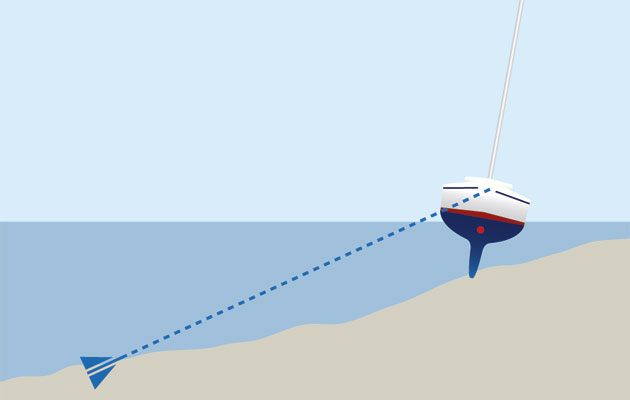
consider what sailors do when the sea is becalmed so no winds can fill the
sails, or when a ship runs aground and can’t float. Mariners will row out in a
smaller boat to sink an anchor a distance away.
The hawser, an attached rope, is then brought back to the larger yacht or
ship, from where crew kedges—pulls on the rope until the vessel moves in the
desired direction.
Page requirements are what
make the game of writing possible. Even this blog is inspired by my goal to
post 100 essays by Spring of 2020.
Without that goal, I might not be so focused or inspired. Goals, in this
case page requirements, are the anchors we need to throw into an unknown depth
to move our ship forward. Let us all
endeavor to count and to count on our
words as vessels to help us navigate life in meaningful, deep, adventuresome, significant,
and pleasurable ways that count.
Works Cited
Cameron, Julia. The
Right to Write. New York: Putnam, 1998.
