Wednesday, February 7, 2018

Prompts, Proctors, Pornography

Image result for dark fantasy writing prompts

                   Think not to confuse me with poems or love beginning
                               Without a sign or sound...

                                            ~Mary Oliver, "Being Country Bred"

             A Google search for “poetry prompts” directs us to 33 million links, just over the broader “writing prompts” which yields 29 million. And Amazon offers 951 hits for book-length collections of poetry prompts; 6,000 for writing prompts in general.  In short, there is a whole industry based on the assumption that we must have someone’s hand clasped over our writing hand to guide it, much like that hand guided us while we learned the now-disappearing art of cursive writing. 

            Sappho, William Blake, Charles Dickens, Anthony Trollope, Emily Dickinson, and Virginia Woolf did not need to look outside of themselves for someone to offer them prompts for writing. Nor did Rilke, Shakespeare, or Ice-T. Prompts are the invention of teachers who need to control variables so as to be able to grade students comparatively on the bell curve.  
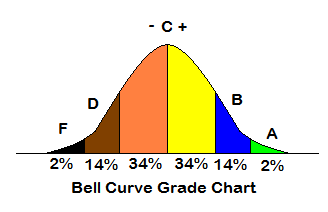
Image result for bell curve grade
            A grade book and quarterly report card cannot wait for the messy process of inspiration and students straying into topics that are not easily accessible.  A lesson plan must be clear, consecutive, easily assessable if the teacher is to be rehired for tenure. And must be completed so that the students can turn to preparing for placement tests. A teacher can proctor how various students adhere to a prompt such as this:

Write a fourteen-line poem about your  mother in the form of a weather report set on a winter’s day.  For inspiration, listen to a weather report on television or through YouTube. Include the color red and the following words: “major, rabbit, kill, apple."


With a threat of grade hovering over them, students will dutifully mark out fourteen lines, watch reports, and tick off the color red and the required words as they contrive them into place.  Or students will balk.  I’m with the students who balk.  As student Germain Palacios said of writing prompts, “that regimental approach to writing often stifled my true voice and creativity.”
           
Yes.  I know the allure of prompts. I have written hundreds of poems in response to them—doing so saw me through recovery from bunion surgery, it secured a place for me in community publications, I saw my name in the lights of anthologies and literary journals, I kept a promise to someone who invited me to submit.  Like the smartphone, social networks, YouTube, and Netflix, prompts relieved me of the responsibility for focusing myself—prompts did that hard work for me. And I met all the requirements, no matter how intricate or distancing.
Prompts are as addicting as substances: numbing the discomforts of feeling and growth; tempting us with immediate gratification; fostering people-pleasing; making others responsible for us; distracting us from our higher, intuitive and risk-taking selves; eventually making our creative lives unmanageable without them.
 But the poems I have written to external promptings have never been my best poems.  Without knowing the genesis of all the individual poems, my friend Carole and I, when reading through each other’s poetry manuscripts, consistently choose for deletion the prompt poems.  Something doesn’t ring “authentic.”

In his collection of essays Poetry and Ambition, Donald Hall calls the poems marching off the assembly lines of academia “MacPoems.”  Generated in, from, and for the academic classroom and Poe Biz—publication, teaching positions, reading circuit—these poems are externally prompted for external approval and acceptance.  They are, too often, more about politics than poetry.

My students—hard-wired to write in response to prompts, to teacher-please, to supply their grade-junking needs—ask for me to tell them “what I want.”  Always apprehensive about making them my clones, of doing for them what they must do for themselves, I listened, instead, to what they said about themselves.  I got into the habit of noticing for them all the possible directions their own poetry might take:  “That’s a poem idea,” “Write about that.”  I became an idea mill, for the sake of being an idea mill. I became an idea mill for my own work—displacing the more important authentic need to listen to myself, express, explore, follow-through.  I saw “prompts” in everything.  It silenced me.

Pornography is isolating/wresting one aspect of someone or something to use for our momentary pleasure.  Writing to a prompt, I wrest my writing capacity from all other aspects of myself—my angst, questioning, fecund chaos, wonder, patience, possibility—to have the momentary pleasure of saying “I wrote a poem,” or, worse, “my poem will be published.”
 As opposed to inspiration—“in,” as from within; “spira,” as from one’s own breath, own internal promptings—external prompts invite us to exploit ourselves—as in ‘attempt to capture,’ ‘military expedition,’ ‘overworking,’ ‘using’—in the service of amassing, hoarding, piling up more poems or grades.  Relying on outer prompts instead of inner promptings are living a reactive as opposed to proactive life, of buying gifts by bridal registry instead of loving attention, shopping for the sake of shopping, writing to say I’m writing, Astro Turf instead of leaves of grass, shadow instead of substance.


Wednesday, January 31, 2018

Scrolling, Scrolling


Scrolling, Scrolling


          Let’s imagine Khamet, a young scholar in Egypt, 2,018 B.C.E., the year Abraham was born in the Babylonian city of Ur.  On a high, open shelf, Khamet finds “The Story of Sinuhe” on a scroll—two wooden dowels, about 12 inches high, onto which a 30-foot length of papyrus is rolled left and right. This paper is made of special reeds that, lain flat, adhere to each other by their own natural gum.  Khamet hefts down the scroll, brings it toward his body, hugs it to himself until he  lays it on a table.  Here he unrolls the texts inscribed with special inks made of burnt wood and acacia sap.  A fragrant woody scent, reminiscent of the scroll’s natural origins, wafts up.  Khamet visits his favorite books so often, that he can recognize them not only by touch but by their individual scents. These perfumes etch the words into his memory on a cellular level.  Tonight, at dinner, he will recite a portion of the story to his family, by heart.  He traces the words as he reads, the raised edges of the letters as familiar to him as the brailling that won’t appear for another 3,809 years, when Napoleon’s soldiers had to devise a way to send night messages without exposing their location with light.

          To open this scroll is, for Khamet, to spread his arms wide—an inviting gesture that has lodged itself into his strong arms and muscular back. His burly wrists turn in coordination as he reads. This is the only scroll he will read today, spending time to discuss it with his fellow scholars, ruminating over it as he walks home by the Nile, where the papyrus grows wild, and crocodiles eyes peek above the surface of the green waters.

          Let’s now imagine Jennifer, 2018 A.D., a student with her smart phone. She’s opened her free Shakespeare’s Sonnets APP, but texts are pinging in, and Twitter, Instagram, Pinterest notices.  She has plenty of time, she thinks, and taps over to Pinterest, and scrolls, scrolls, scattered images and words spinning into a blur.  She is as devoted to her scrolling as Khamet is to his.  But whereas he practices an expansive gesture, spreading open his arms all day; Jennifer curls around her phone, like a conch, small and cramped. Khamet has defined biceps and lats—Jennifer has texting claw, Tinder finger, carpal tunnel syndrome, and cell phone elbow.  Khamet strides into the world with his head up; Jennifer is hunched and distracted—no fragrance, no exercise of her muscles or capacity to memorize, no seeing the scenery or greeting others for long talks as she walks. 


          Because it’s the same glassy surface all day and most of the night, her fingertips are dulled to touch.  And as she scrolls, the message to herself is—hurry to the next thing. Dismiss. What’s next? What else? Go away.  Her brain is enchanted by this flick, flick, flick, this not having to stop, this constant running-away-from to something from-which-to-run-away.  Gertrude Stein once wrote that to know someone’s nature, notice what she or he repeats. What we repeat is what we become.  Jennifer is always hunting, never arriving—a life of fleeting dopamine hits.  Nothing sticks.  Nothing lasts.
          Jennifer will not remember much, if anything, what scrolled past her today.  Instagram promises “Along with making over-posting a non-issue, the new feature also eliminates the permanency.” Jennifer has been entrained by her scrolling to skim—skim past nature, skim past people, skim past her own sensations.Tonight, Jennifer will not recite a sonnet to her family.  She will scroll through dinner as her family scrolls, too. She will swipe away this day as she will tomorrow, all blurring into each other.  And, oops, she forgot to read those sonnets, and, after making thousands of scrolling decisions, she ran out of willpower to even brush her teeth last night.  And now she’s already late for class.


 Between Khamet and Jennifer, we had Jack Kerouac, who wrote his travelogue On the Road, on one continuous 120-foot scroll of paper in a three-week binge.  His manuscript, like his travels, were one continuous, unbroken, cohesive artifact. In comparison, with today’s smart phones, we scroll away our lives, in a blizzard of confetti.


Tuesday, January 23, 2018

The Rude Student: Preparing the Way


Image result for no food drink cell phone

The Rude Student: Preparing the Way

            She comes in eight minutes late to class, first banging at the door, noisily dragging in a large briefcase on wheels and a large bag, both of which she parks by two open desks, mutters a curse, and leaves.  Another eight minutes later she’s back with a large, domed Starbuck’s concoction, frothing whipped cream at the straw hole.  With her other hand, she’s texting, and listening to some loud staticky music through ear buds.  She reeks of smoke. A billed cap nearly covers her eyes, which are already covered by large, mirrored sunglasses.  She doesn’t notice the others in the classroom.  But wait, there’s more.
            She’s chewing gum, blowing bubbles, and popping it. She fumbles around with the zipper of her briefcase, and yanks out a laptop which she opens on one desk, and then plops her bag on the chair in which she is sitting to hide her phone.  Feet go up on a desk in front of her.  She hums to her music, and clicks her pen to the rhythm. She sucks loudly on the straw of her Starbuck’s, which then falls on the floor and spills.  Students around her run to yank paper towels from the bathroom.  She leans her head against the wall and falls asleep. Snores.

            The she? ‘Tis I. The desk I use is the teacher’s desk. I tried to get in the part about pulling out a large Styrofoam container of fish-sticks and fries, but I didn’t know how to get it all onto the two student desks the Rude Student occupied.  It is the first meeting of my class.  The other students sit at their desks stunned, because I’m supposed to be their teacher.
            When I pull off my glasses, I poise my whiteboard marker like a cigarette between my fingers and ask:  How did you feel during my performance?  The answers from my four classes include “annoyed,” “frightened,” “angered,” “irritated,” “abandoned,” “wanting to leave,” “puzzled,”  “stunned,” “frustrated.” All these I write on the board. Someone inevitably says, “halfway through, I got it.”  Then I have them “name that rudeness,” which I also list on the board.
            Before we move on to the syllabus and protocols of our semester, I say, “All these things you felt while I was acting (out), are all the things and more that I feel when students” and then I wave my pen at the gallery of rudenesses I collected from them.  “Got it?” I ask.  They all do.  I then ask them to suggest how I might expand my act for the next time I perform this act.  Many of the moves I include here were student suggestions.
           
            Each class becomes its own family, to which we bring our own strategies for surviving a shared space and mission—in the case of a class, to learn. All the ways The Rude Student acted out are survival strategies—self-soothing oral gratification through chewing gum; eating, especially sugar; drinking; playing with the containers and navigating things to the mouth. Then there’s literally tuning out with ear buds, dark glasses, cap, sleep.  Distancing through the laptop.  Stimulating dopamine release through use of the phone.
When, in the past, I droned on about course policies (you can guess them from the scenario above), it was just more constraining rules to which to rebel. When I embody The Rude Student and appeal to my students’ empathy, I enter their consciousness through the larger portal of emotions.  And, with the performance and talk-back done, I can say the last line of Philip Roth’s Portnoy’s Complaint, “Now we can begin.”


Friday, January 30, 2015

Write a Poem a Day


January 30, 2015
What I Have Learned in the First Month:
     During 1996, I wrote a poem every day—sometimes up to four—without fail. My harvest for the year?  Over 450 poems. Too much of the time I strained from having to write lock step: clock-driven, "required."  Although there was joy and energy and insight--poems that I love and that were well received--I dropped the commitment at the end of the year.

     I recommitted myself this year to write a daily poem or song, and two weeks into the honeymoon, my inner perfectionista reared her Kali head to whip me to the laptop, as my grandmother whipped me to the piano when I was four years old. I froze. That’s no way to sustain a creative life.  Encouraged by my poet friend Joan Cacciatore Mazza, who has kept this commitment going for three consecutive years, now, I am developing ways to keep my worthy commitment with compassion and wisdom:

(1)  BREATHERS: I’ve been honoring my Sabbath by not using the internet or my computer on Sundays. This commitment has been in place for years, and is life-saving.  (See my blog entry for March 24, 2014 Media Freeze). I'm adding: No new writing.  I do enjoy puttering with manuscripts and revising on hard-copy, but the heat is off.  I'll revisit the idea of writing new work on Sundays, at some point.

(2)  PREPARATION: I have come to the keyboard like a stunned deer, not knowing where to start. I am learning, instead, to prepare for writing as I would for a beloved.  Would I come late, blow-off a date, disheveled, empty-handed, resentful?

(3)  WRITE WHEN INSPIRATION COMES:  Anne Sexton said that her only discipline was to write when inspiration comes.  Take the gift if it comes.  But don’t fall into the trap of limiting myself to that.

(4)  BRIDGE: I notice that it’s helpful to start a poem one day, and finish a draft, the next.  This gives me a go-to warm-up.  Hemingway recommended to end the day mid-sentence, so as to have a launch for the next date.  Two half poems—the finish of one and the start of another—count as a whole poem for the day.

(5)  NOTEBOOK:  Keep a notebook with me, as I would a trusted friend.  Be conscious to record, in writing or voice, notes, ideas, lines, poems, and songs as they come.

(6)  FALLBACKS:  Use prompts from all the rich print and online sources I have, such as Diane Lockward's superb THE CRAFTY POET.

(7)  READ: Nothing makes me want to dance more than being with other dancers.

(8)  MOVE EASY IN HARNESS:  Robert Frost said "Freedom is moving easy in harness." A bit pulled too hard can gags the horse.  Since I’m taking off Sundays, I am not going to require a poem for every day of the year. 

(9)  ARTIST’S DATES:  Rilke recommends solitude, Cameron solo dates.  It works!  My runs often yield poems, as do unmediated drives, forays of various sorts.  Poet Peter Murphy has, for years, taken himself, solo, to the Jersey shore for writing weekends. I realize that shopping for clothes has been very generative for my poetry.

(10)         REWARDS: Writing, itself, is the reward: the energy, insight,  joy in language, the integrity of honoring my gifts. Mark Edmundson rues that today’s students are not challenged to live life with “intensity, focus, and design.”  This recommitment challenges me to do just that: live with intensity, focus, and design.        

(11)         APPRECIATION: I finding it rewarding to list the titles of my poems and songs, print them out, and organize them in beautiful binders. Then, when Kali visits, I have something with which to distract her.

(12)         WRITE ABOUT THE EXPERIENCE.